How to use AI to plan a week of family dinners and the shopping list
One prompt plans five weeknight dinners your family will actually eat, built around what is already in your fridge, and writes the shopping list by aisle. Here is how to set it up and what to check before you shop.
Plan five dinners and a shopping list
I cook for [number] people, including [ages of any kids]. We don't eat [foods we avoid, and any allergies]. On weeknights I have about [minutes] to cook, and my food budget for the week is about [amount]. Already in my fridge and cupboards: [list]. Plan five dinners for Monday to Friday that use up those ingredients first, turn leftovers into another meal where it makes sense, and need no special equipment. Then give me one shopping list for everything else, grouped by store section, with quantities.
Tap a blank to fill it in, or copy it as it is.
A meal plan is one of the easiest jobs to hand to an AI assistant. It's quick, it's low risk, and the answer is easy to judge: you'll know at a glance whether your family would eat it. The prompt above (a prompt is the text you type to the assistant) does most of the work. The steps below get the plan from "fine" to "this is our week".
What you need
- Any AI chat assistant, such as ChatGPT, Claude, Gemini or Copilot. This kind of prompt works in any of the major chat assistants.
- Five minutes to look in your fridge and cupboards. The list of what you already have is what makes the plan cheaper and stops food going to waste.
- Your family's no-go foods and any allergies.
Step by step
- Fill in the brackets. Be specific. "Two adults and kids aged 6 and 9" gets you a better plan than "a family", and "about 30 minutes" is clearer than "quick".
- Paste it in and send. You'll get five dinners and a list.
- Push back on anything that won't work. You don't need to start again. Write things like "Swap Wednesday for something without the oven" or "My 6-year-old won't eat anything spicy, adjust the plan". Assistants are good at revising.
- Ask for the final list. Once the plan is settled, write: "Now give me the shopping list for this final plan only." That drops ingredients from dinners you swapped out.
- Optional: ask for a prep order. "What can I prep on Sunday to make the week faster?" gets you a short list of jobs like washing salad, cooking rice or marinating chicken.
What a good answer looks like
A good plan names five dinners with a rough cooking time for each, says which of your ingredients each one uses, and points out where a leftover becomes another meal: chicken cooked on Monday shows up in Tuesday's fried rice. The shopping list is grouped (produce, dairy, meat, cupboard) and gives amounts, not just names. The plan itself should fit on one screen. If the assistant adds full recipes, that's a bonus, not the point.
Where it goes wrong
- Quantities. An assistant estimates amounts, and the estimate can be off for your family. Read the list against the dinners before you shop, especially for meat and fresh produce.
- Allergies. Never treat an AI meal plan as allergy-safe. It can miss ingredients hidden in stock cubes, sauces and spice mixes. Check labels the way you always do, and if someone has a serious allergy, ask their doctor or a dietitian about safe swaps rather than the assistant.
- Ignoring your fridge. Sometimes the plan quietly calls for new ingredients for every dinner. If it does, ask: "Which dinners use what I already have? Rework the plan so at least three of them do."
- Prices. The assistant usually can't see today's prices at your store, so any cost it gives is a guess. Treat your budget as a steer for the kind of food it picks, not a promise of the total at the till.
- Cooking times. "20 minutes" sometimes means 20 minutes after everything is chopped. If that matters on a school night, ask for total time including prep.
Keep it private
This job needs almost no personal information. You don't need names, your address or your store loyalty number: ages and food rules are enough. If someone in the family follows a diet for a medical reason, describe the food rule ("low salt", "no gluten") rather than the diagnosis. For more on what to leave out of any AI chat, read what you should never paste into an AI chatbot.
Tested with
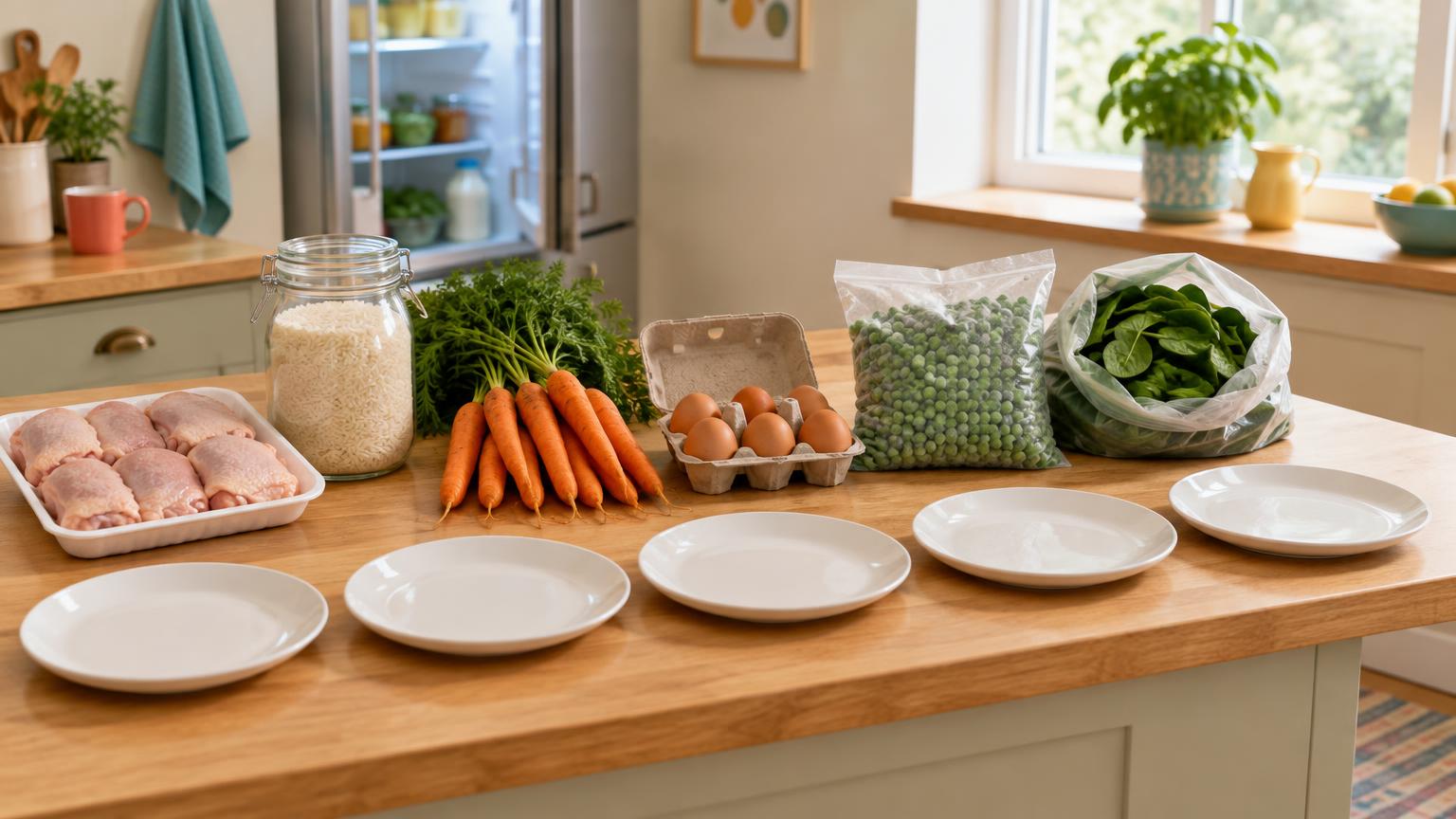
We ran this prompt in Claude in November 2026 for a family of four with kids aged 6 and 9, a no-mushrooms rule, 30 minutes on weeknights, and chicken thighs, rice, carrots, eggs, frozen peas and a bag of spinach on hand. It used the chicken and spinach early in the week, while they were fresh, turned leftover chicken and rice into a fried rice for the next night, and grouped the list by store section with amounts.
